
Photo Archive
Foto Archiv

SPRAYCITY bei der Ausstellung „Takeover“, 2019, Wien Museum, Wien. © Stefan Wogrin / SPRAYCITY
Our archive currently includes around 390,000 image documents from all over Austria, Europe, Asia and the USA. The SPRAYCITY.AT website forms an interface through which a selection of around 150,000 photos can be accessed via the Internet. The online archive is continuously supplemented with photo updates. Additional photos can be extracted from the archive if required
Our Photo Archive is divided into:
-
Online archive (publicly accessible)
-
Photo Archive / Ongoing Documentation by SPRAYCITY since 2001
-
Collection and digitisation of photographs acquired before SPRAYCITY was founded in 2001 (e.g. for book projects such as „Graffiti Wien“)
-
Collections and Archives from external photographers
-
Collection of photos for exclusive use in the ‘Offline Graffiti Magazine’
Documentation
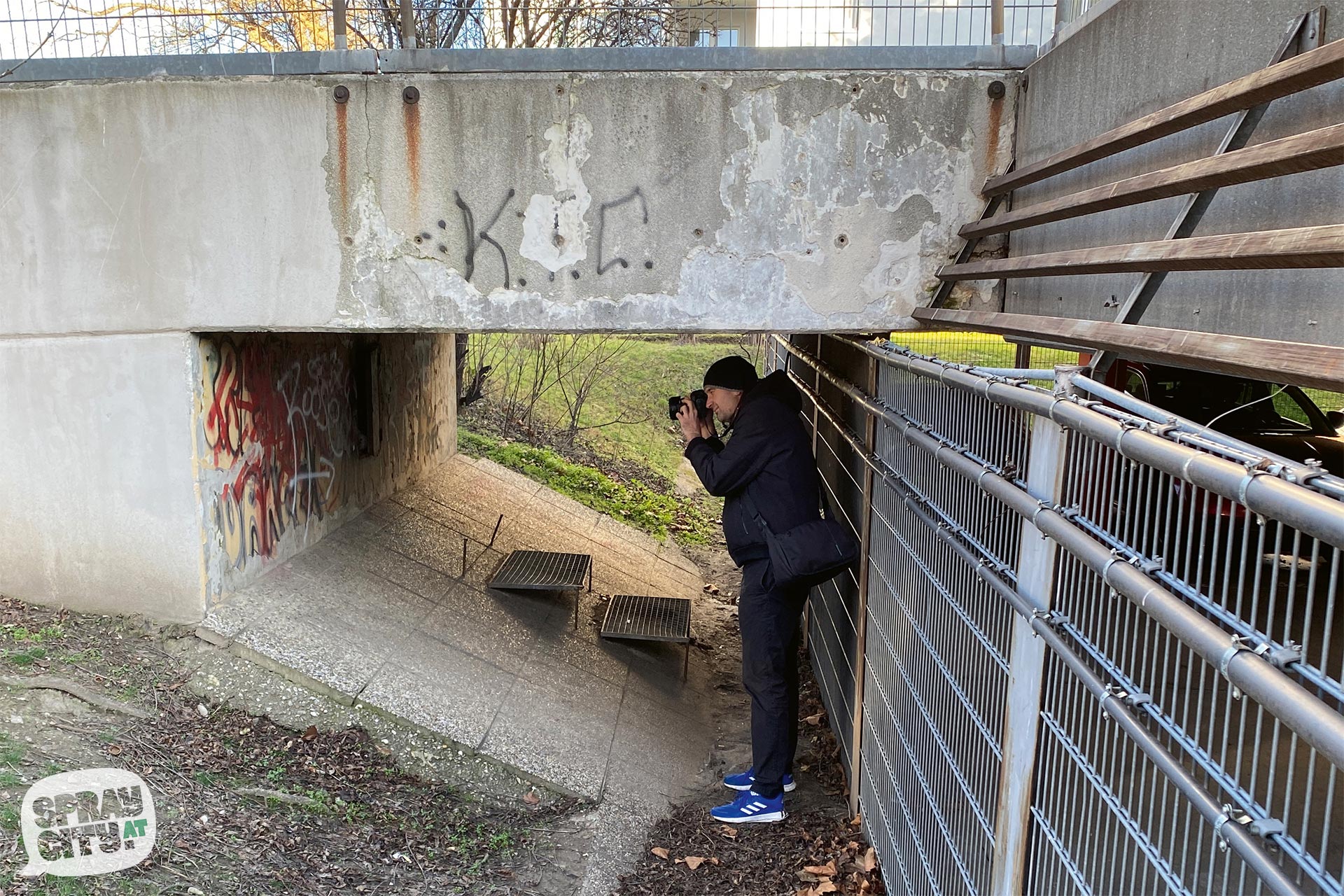
Since many works are only visible for a short time, there is a constant, systematic ongoing documentation by SPRAYCITY. The geographical centre of the documentation are the city of Vienna and its surroundings. The documentation in the federal states takes place at irregular intervals. Due to its size and population, Vienna can also be considered the centre of the Austrian writing movement, which is also reflected in the number of works. The documentation usually takes place as part of our documentation tours, which have the purpose of photographing as many new works as possible (mainly works not in the archive yet).
Photo-Tours
A photo tour usually takes 2–6 hours and is done 2–4 times per week. A specific target is typically selected, and the environment is then examined for new works. When choosing the destination, previous photo tours are also taken into account, so that certain places are not visited directly one after the other. Specific locations with increased frequency, such as the Danube Canal or certain ‘Wienerwand’ (legal graffiti walls in Vienna) areas, are recorded every three days on average. Planning a photo tour is usually preceded by an investigation of online content (like social media platforms) for potential newly created works, as well as anonymous tips.
How we photograph
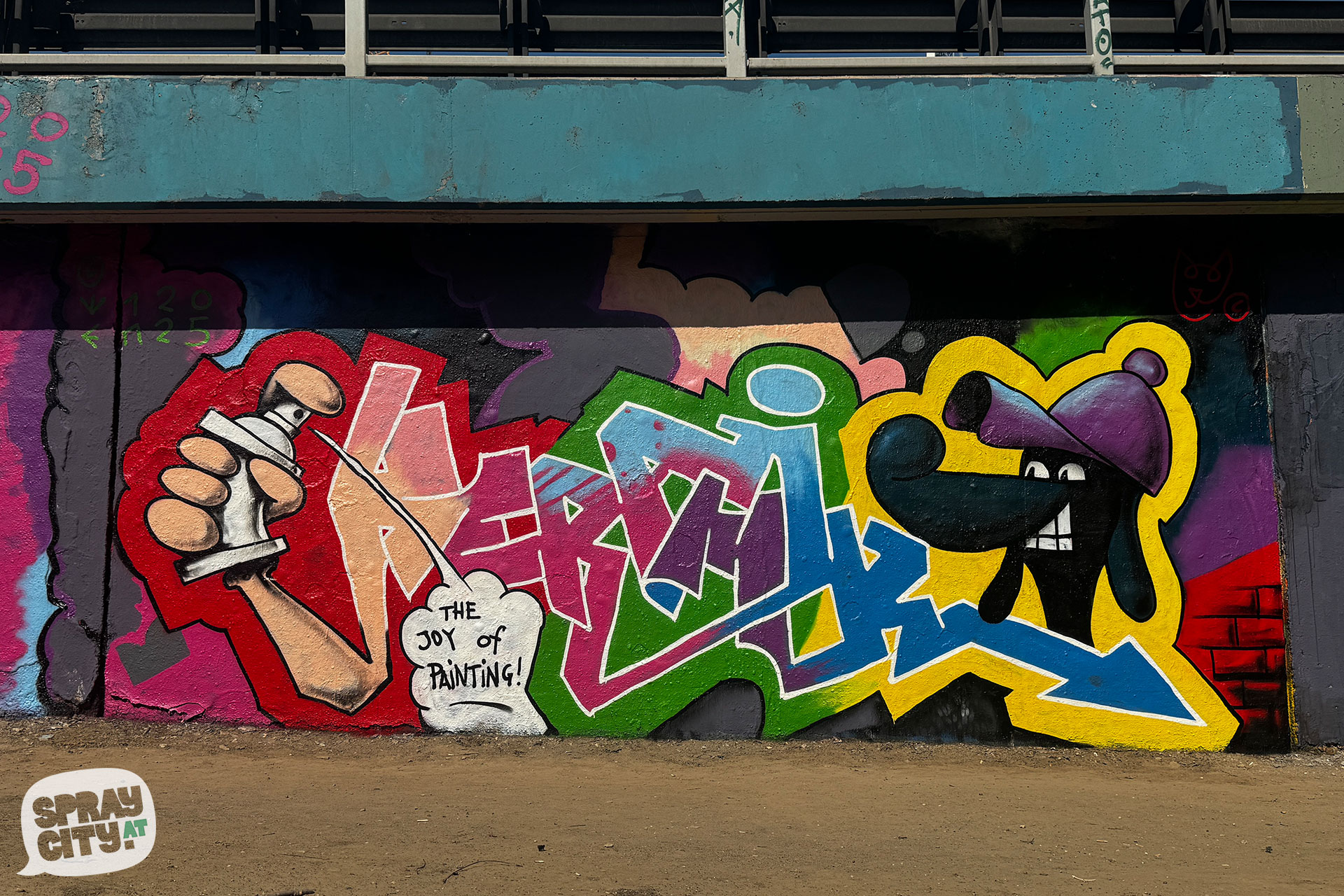
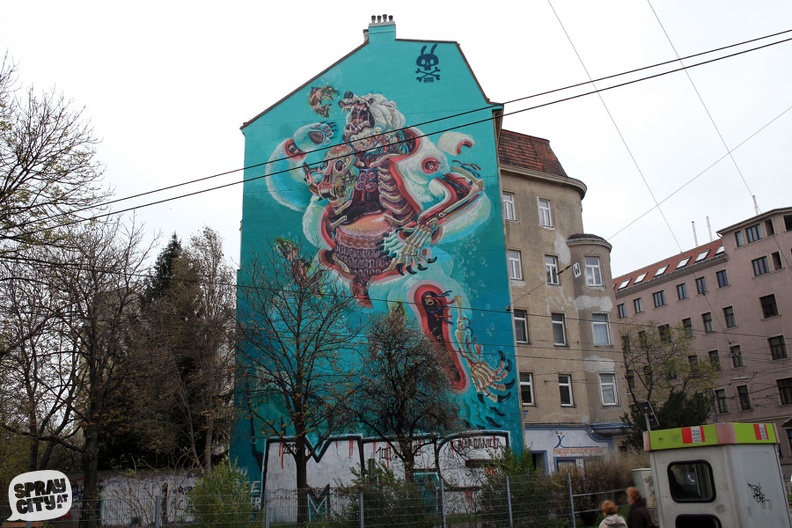
New works are taken almost exclusively in the form of an overview photo. Thereby, the work is positioned in the middle of the picture. Since the selection of the location is often essential, the surroundings are also partly recorded. In addition, graffiti in the public space is always connected to it and should, therefore, not be seen separately from it. The image carrier or background should also be visible in the photo. Detailed photos are only used very rarely, for example for small-scale works like stencils or stickers—although an overview photo is always created here as well. On average, 1 to 3 photos are recorded for each work. At specific locations, overview photos of entire walls or wall sections are also taken to ensure later comparison with older photos from the same place. In this way, the development but also the stratification of the individual works can be tracked and analysed over time. For the recordings, we use mostly full-frame single-lens-reflex (SLR) or system cameras. In case of spontaneous encounters, backup photos are also taken with the smartphone. On average, between 10,000 to 15,000 photos are taken each year.
What we photograph
Graffiti Writing
Murals

Street Art
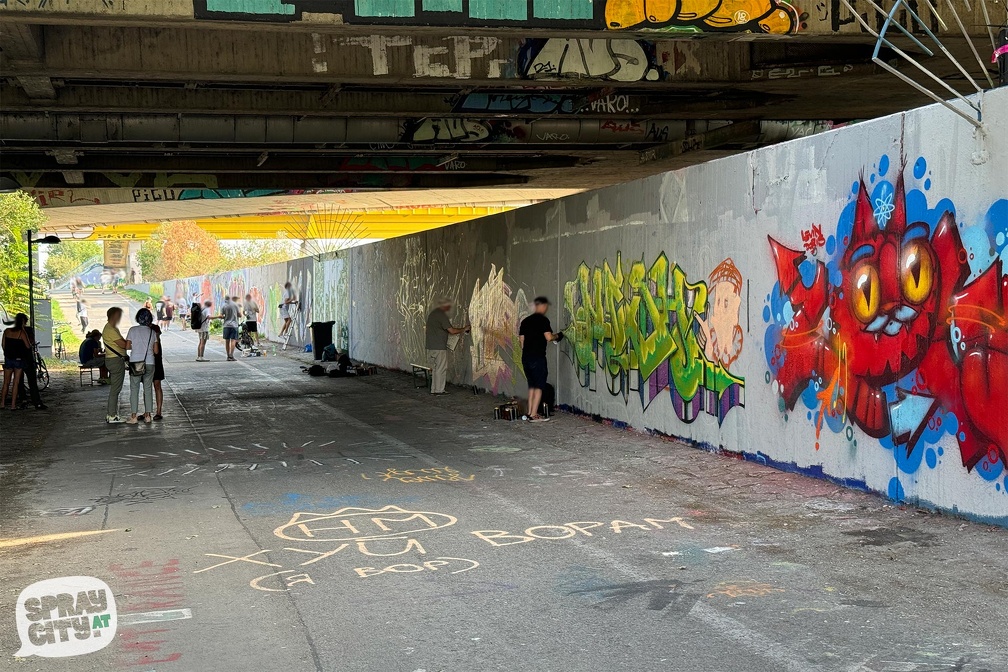
Jams & Events

Exhibitions

Historical Graffiti

Political Graffiti
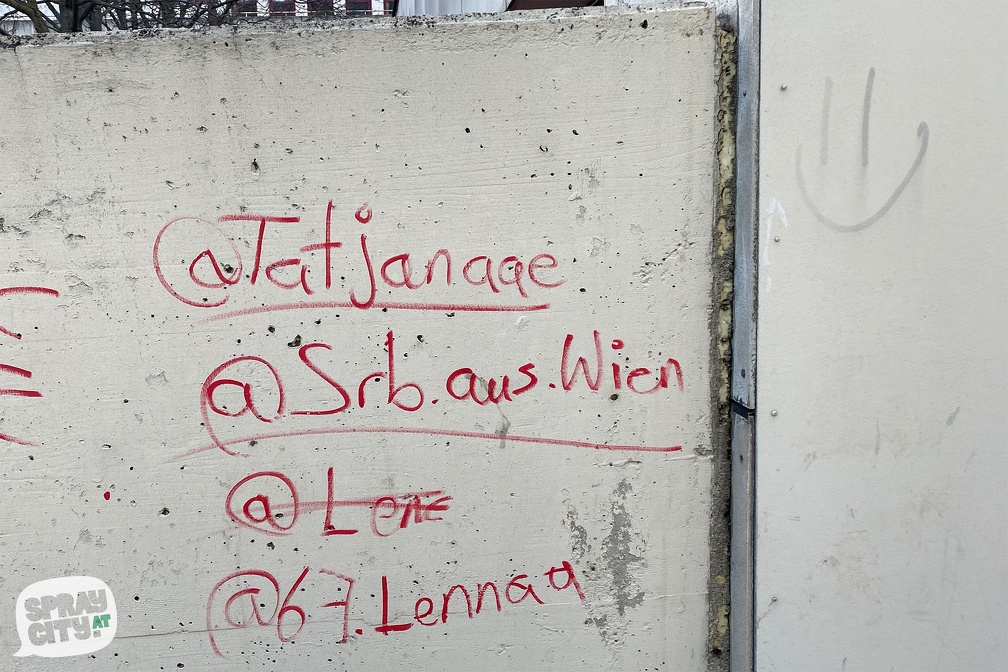
Social Media Graffiti
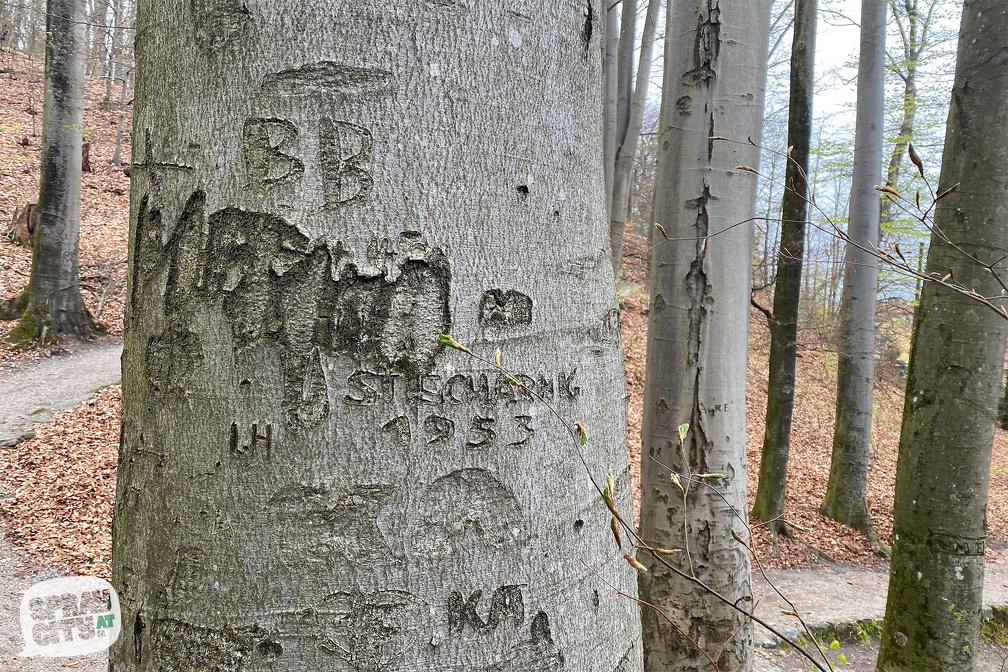
Tree Graffiti
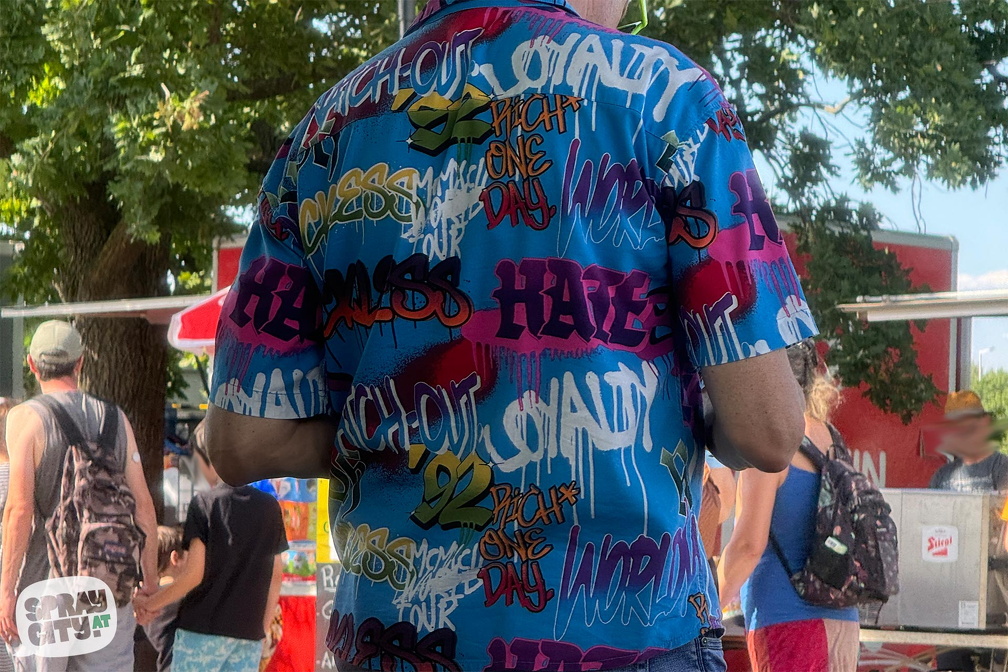
Graffiti Related
Collection & Digitisation
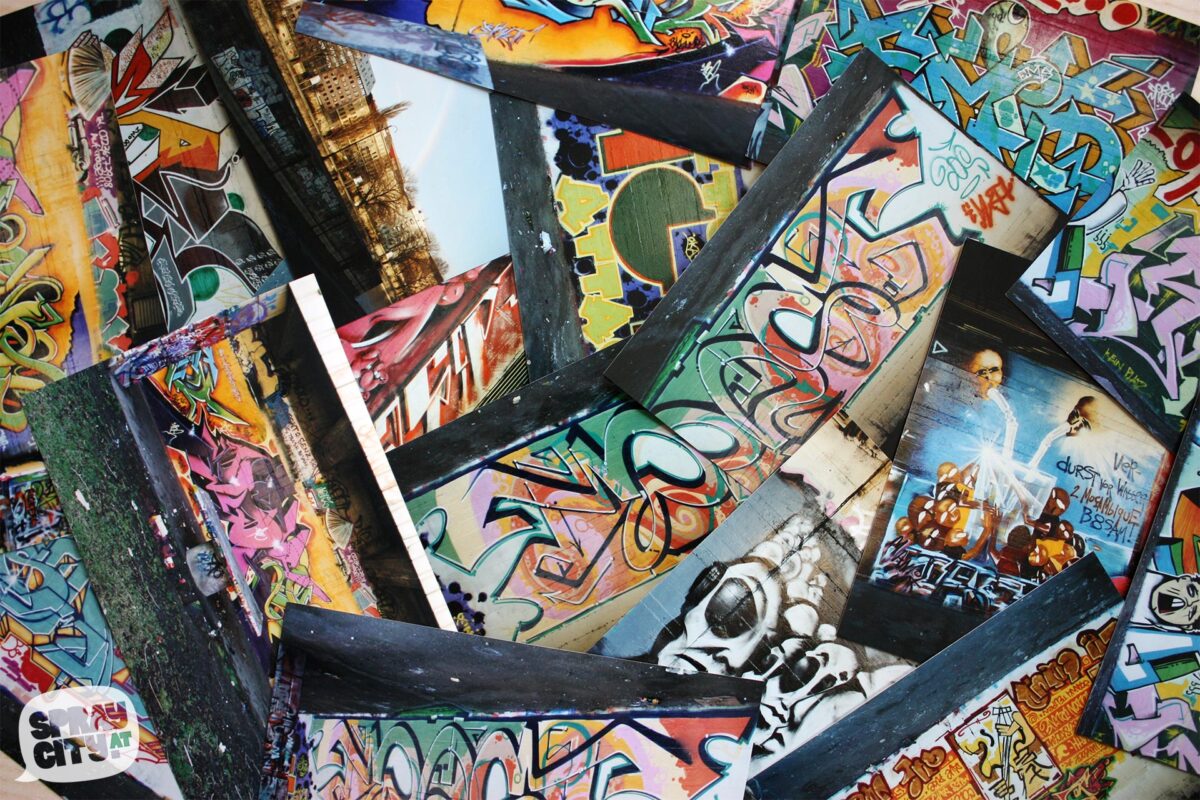
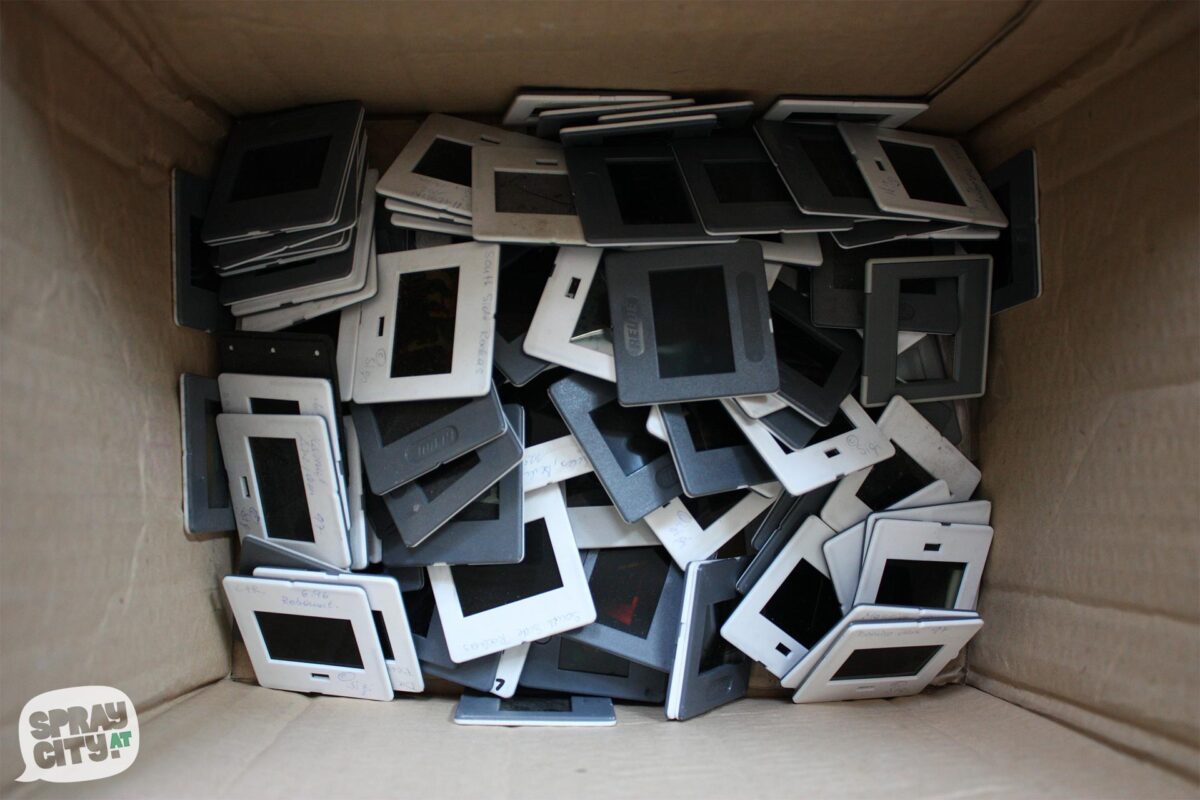
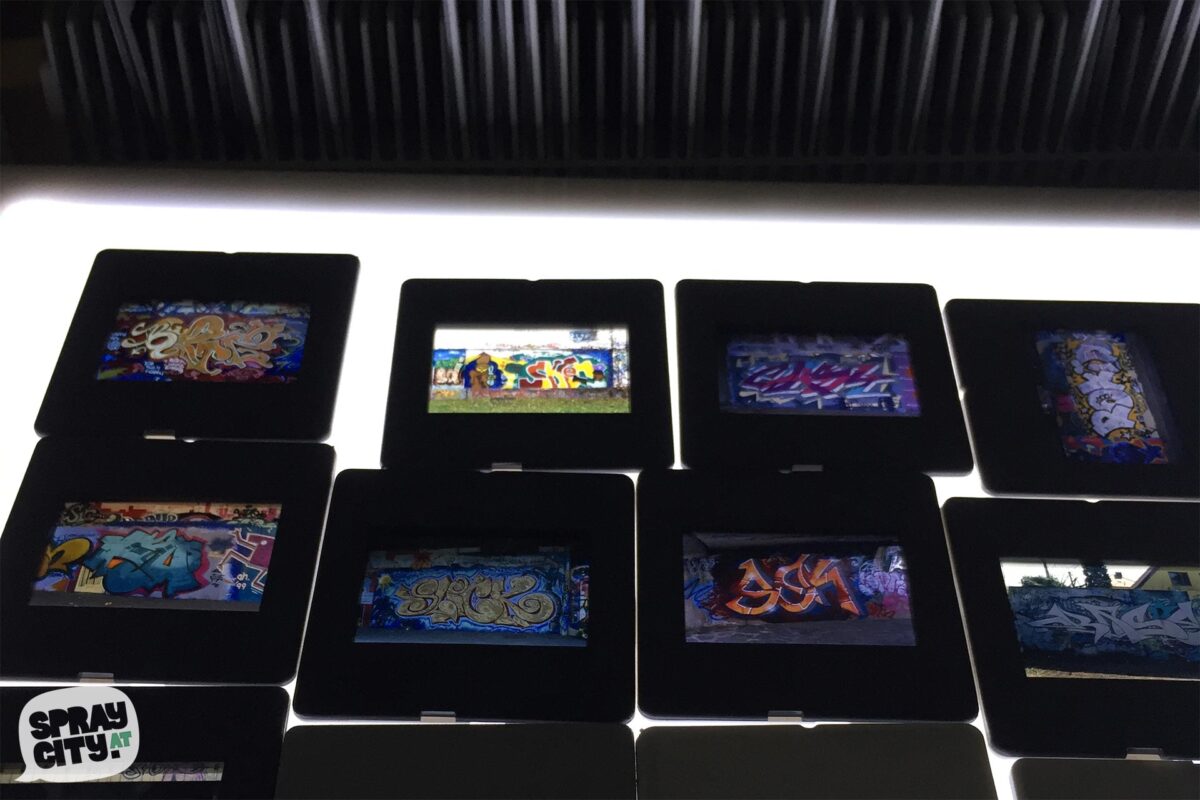
The large number and far-reaching geographical distribution of the works created makes a total coverage almost impossible. Some works disappear without even being visible to the public. However, in order to enable representative documentation, SPRAYCITY also collects external photos. This includes in particular photographs taken before the archive was founded in 2001.
SPRAYCITY furthermore explores the history of the writing movement in Austria, which includes the collection (and first-time digitisation) of photos from the beginning of the writing movement in Austria until now from all kinds of archives. In the period from 2013 to the present day, around 10,000 analogue photos have been scanned. The research material comprises around 30,000 photos that have been sorted and categorised.
Online Photo Archive
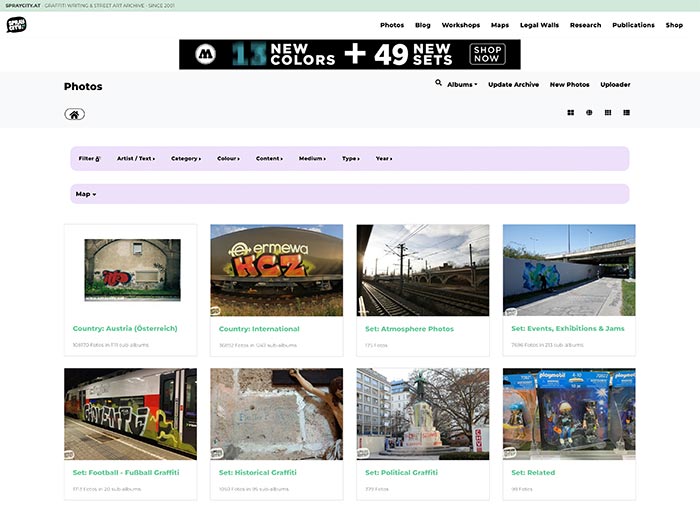
The SPRAYCITY.AT website forms an interface through which a selection of around 150,000 photos can be accessed online. The online archive is continuously supplemented with photo updates. Additional photos can be extracted from the archive if required.
Online Photo Archive